
Socotra Island Blue Baboon
Monocentropus balfouri
The Socotra Island Blue Baboon is one of the hobby's true oddities: a cream-and-electric-blue baboon from the arid, isolated island of Socotra off Yemen that breaks the Old World mould in two ways. It's unusually mellow for a baboon — fast, but shy and slow to anger — and it's one of the very few tarantulas that will genuinely live communally, mothers even bringing food to their spiderlings. A heavy webber and hardy in dry conditions, it's a rewarding intermediate step into Old Worlds with a look nothing else matches.
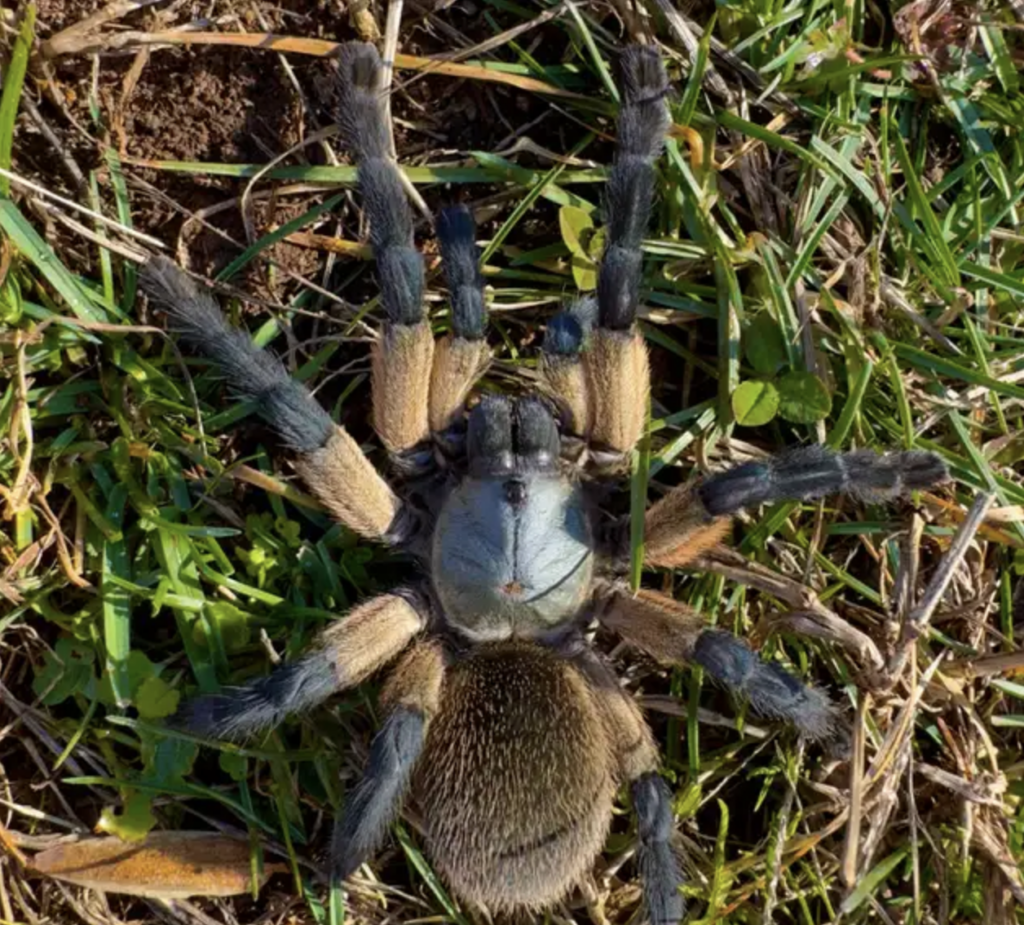
Photo Credit: Exotics Unlimited
- Temperature75–82°F (24–28°C) day, easing a few degrees at night. It comes from a hot island climate and eats best in the low 80s; in cooler winter temps it retreats to its tunnels and fasts for weeks, which is normal.
- HumidityLow. This is an arid-island species — 50–60% RH is ample and it tolerates dry conditions that would stress moisture-dependent spiders. Keep the substrate mostly dry with a shallow water dish; a light spritz on one side occasionally is more than enough. Good ventilation over trapped humidity.
- Adult sizeA medium-sized tarantula: adults reach 4.5–6 inches across the legs (diagonal leg span). A relatively fast grower — expect visible progress between molts when well fed.
- LifespanFemales roughly 12–15 years; mature males 3–5 years. Still a relatively new species to the hobby, so the female ceiling may prove higher with time.
Enclosure
A terrestrial burrower and prolific webber: give a 15×12×12" footprint or so with about 6 inches of substrate and several cork/hide anchor points — it will web the surface into an intricate canopy. Front-opening and well-sealed is ideal (it's fast). If you keep a group, scale the floor space up and provide multiple hides.
Substrate & water
5–6 inches of a burrowable coco fibre/topsoil mix, kept mostly dry with a shallow water dish. It burrows and then curtains the entrance with silk. Don't keep it wet; a barely-damp lower layer at most.
Feeding
Prefers smaller prey taken often over large items — two small crickets or dubia twice a week suits juveniles; adults a small-to-medium item weekly. Strong feeder when warm; expect long fasts when cool or in premolt. In communal setups it tolerates shared feeding, but watch body condition per animal.
Temperament & defenses
Old World — no urticating hairs, strong venom — but famously the calmest of the baboons: shy, quick to retreat, rarely posing. Fast enough to bolt, so still no handling. Rehouse deliberately. Its rare communal tolerance is real but not guaranteed; monitor for aggression and size disparities if group-housing.
Keeper’s notes
One of our favourites to recommend to an intermediate keeper ready for an Old World: stunning colour, mellow for a baboon, hardy in dry conditions, and the only tarantula we stock that can be kept as a colony. Respect the speed and venom, keep it dry, and it's a showpiece.
Browse available specimens → None of this species in stock right now — browse the full shop or check back soon.
We raise and document every animal before it ships, so stock moves slowly and quietly. Leave your email and we'll tell you the moment one is ready — no other mail, and you can leave the list any time.