Choose “Save as PDF” in the dialog. If it didn’t appear, tap the button above.
The Socotra Island Blue Baboon is one of the hobby's true oddities: a cream-and-electric-blue baboon from the arid, isolated island of Socotra off Yemen that breaks the Old World mould in two ways. It's unusually mellow for a baboon — fast, but shy and slow to anger — and it's one of the very few tarantulas that will genuinely live communally, mothers even bringing food to their spiderlings. A heavy webber and hardy in dry conditions, it's a rewarding intermediate step into Old Worlds with a look nothing else matches.
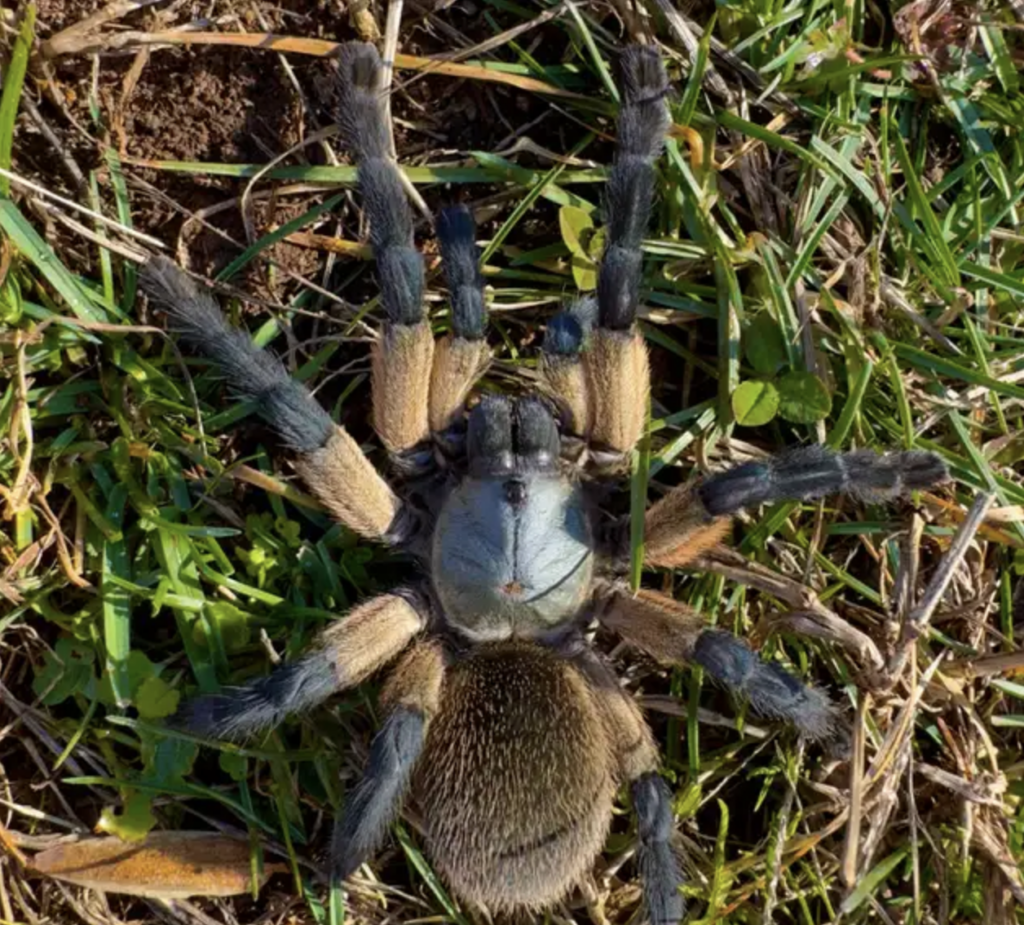
Photo Credit: Exotics Unlimited
A terrestrial burrower and prolific webber: give a 15×12×12" footprint or so with about 6 inches of substrate and several cork/hide anchor points — it will web the surface into an intricate canopy. Front-opening and well-sealed is ideal (it's fast). If you keep a group, scale the floor space up and provide multiple hides.
5–6 inches of a burrowable coco fibre/topsoil mix, kept mostly dry with a shallow water dish. It burrows and then curtains the entrance with silk. Don't keep it wet; a barely-damp lower layer at most.
Prefers smaller prey taken often over large items — two small crickets or dubia twice a week suits juveniles; adults a small-to-medium item weekly. Strong feeder when warm; expect long fasts when cool or in premolt. In communal setups it tolerates shared feeding, but watch body condition per animal.
Old World — no urticating hairs, strong venom — but famously the calmest of the baboons: shy, quick to retreat, rarely posing. Fast enough to bolt, so still no handling. Rehouse deliberately. Its rare communal tolerance is real but not guaranteed; monitor for aggression and size disparities if group-housing.
One of our favourites to recommend to an intermediate keeper ready for an Old World: stunning colour, mellow for a baboon, hardy in dry conditions, and the only tarantula we stock that can be kept as a colony. Respect the speed and venom, keep it dry, and it's a showpiece.