Choose “Save as PDF” in the dialog. If it didn’t appear, tap the button above.
The Strawberry Blonde is a New World terrestrial species and a solid step up for a keeper with a season or two behind them. Here’s how we keep ours.
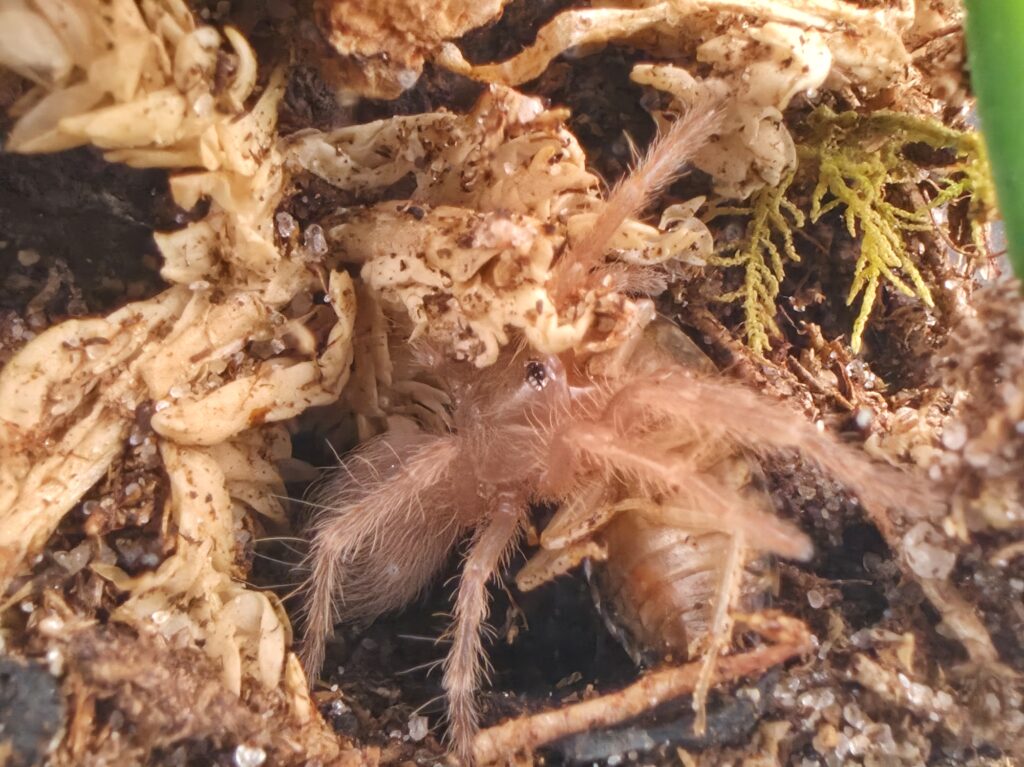
Terrestrial: floor space over height. A 5–10 gallon footprint suits most adults; slings thrive in appropriately small deli cups or sling enclosures. Add a cork-bark hide, a shallow water dish, and a few anchor points to web against. Height should be limited — a fall can injure a heavy-bodied terrestrial.
Mostly dry coconut fiber or a coco-fiber/topsoil mix, packed a few inches deep, a full water dish, and one corner kept lightly damp. Let the surface dry between top-ups; ventilation prevents the stale, humid air that causes trouble.
A steady eater; appetite tapers before each molt. Prey should be about the size of the abdomen — no larger. Crickets, red runners, or Dubia all work, matched to the animal’s size. A rough cadence by stage: Spiderling (0–1.05" DLS): roughly every 5 days; Juvenile (1.05–2.45" DLS): roughly every 6 days; Sub-adult (2.45–4.9" DLS): roughly every 9 days; Adult (4.9" DLS+): roughly every 13 days. These are starting points, not rules — abdomen size and refusals always beat a schedule. Always remove uneaten prey within a few hours — a live feeder can injure a spider in premolt.
A New World species that would far rather flee than fight. When stressed it kicks urticating hairs rather than biting — wash your hands and keep them away from your face after working in the enclosure. Not a handling animal — none of them truly are — but a rewarding display species once it settles in.
Our take on Strawberry Blonde: a species we’re happy to send home with the right keeper. A great step-up species once you’ve kept a beginner or two. (Replace this with your own notes — this is where your voice sells the animal.)