
Pumpkin Patch
Hapalopus formosus
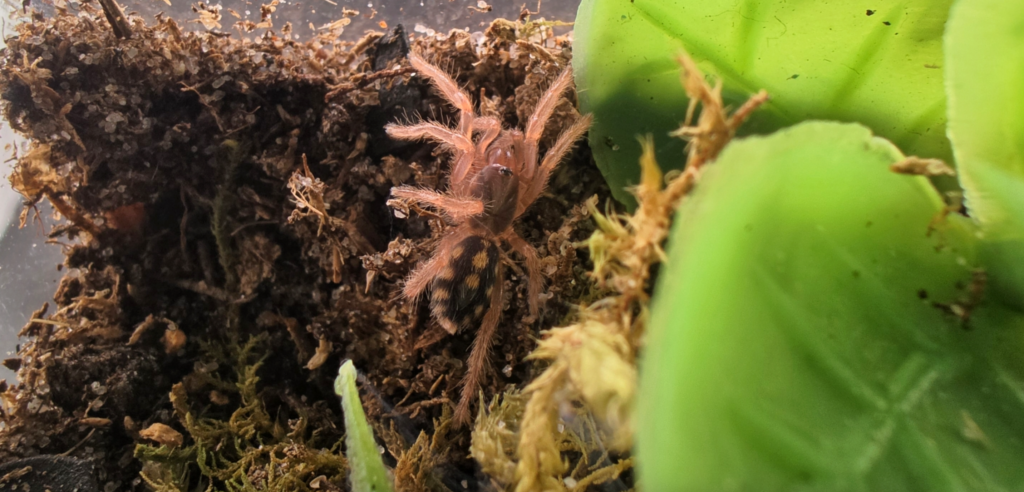
The Pumpkin Patch (Hapalopus sp. Colombia) is one of the hobby's most charming dwarfs — a tiny Colombian terrestrial whose black-and-orange abdomen looks exactly like a little patch of pumpkins. Feisty, fast-growing, and bursting with personality for its size, it's a prolific webber that stays out on display. Hardy and beginner-friendly despite its speed, it comes in 'large' and 'small' forms and is a perennial favourite for anyone wanting a big spider experience in a small package.
- Temperature70–78°F — room temperature is fine for almost every home. No special heating; avoid direct heat sources.
- HumidityKeep the substrate lightly damp (never wet or muddy) and a full water dish. Good airflow matters as much as moisture.
- Adult sizeA small species: adults reach 3–4 inches across the legs (diagonal leg span). A relatively fast grower — expect visible progress between molts when well fed.
- LifespanFemales can live many years; males live a few years after maturing. Both deserve equal care.
Enclosure
Terrestrial: floor space over height. A 5–10 gallon footprint suits most adults; slings thrive in appropriately small deli cups or sling enclosures. Add a cork-bark hide, a shallow water dish, and a few anchor points to web against. Height should be limited — a fall can injure a heavy-bodied terrestrial.
Substrate & water
Keep it lightly damp: coconut fiber or a coco-fiber/topsoil mix, packed a few inches deep. Dampen one side and let the other dry, so the animal chooses its comfort zone. Always a full water dish. Damp is not wet — if you can squeeze water out, it’s too much.
Feeding
This is a hungry, fast-growing species — a strong feeder that rarely turns down a meal outside of premolt. Prey should be about the size of the abdomen — no larger. Crickets, red runners, or Dubia all work, matched to the animal’s size. A rough cadence by stage: Spiderling (0–0.6" DLS): roughly every 5 days; Juvenile (0.6–1.4" DLS): roughly every 6 days; Sub-adult (1.4–2.8" DLS): roughly every 8 days; Adult (2.8" DLS+): roughly every 11 days. These are starting points, not rules — abdomen size and refusals always beat a schedule. Always remove uneaten prey within a few hours — a live feeder can injure a spider in premolt.
Temperament & defenses
A New World species that would far rather flee than fight. When stressed it kicks urticating hairs rather than biting — wash your hands and keep them away from your face after working in the enclosure. Not a handling animal — none of them truly are — but a rewarding display species once it settles in.
Keeper’s notes
Our take on Pumpkin Patch: a species we’re happy to send home with the right keeper. Forgiving enough for a first tarantula, and genuinely fun to watch grow. (Replace this with your own notes — this is where your voice sells the animal.)