
Chaco Golden Knee
Grammostola pulchripes
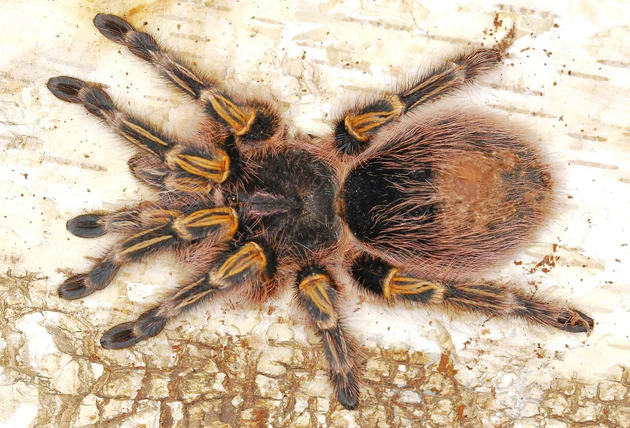
The Chaco Golden Knee is the 'black lab of the hobby' — big, mellow, hardy, and endlessly forgiving, the spider countless keepers (and shops) recommend as a first tarantula. From the Gran Chaco grasslands of Argentina and Paraguay, it grows large (up to 8"), sits out on display, has a huge feeding response, and wears velvety gold leg-stripes over a dark body. Docile to a fault, though skittish if surprised. If you want one big, gentle, beautiful beginner spider, this is it.
- Temperature70–82°F (21–28°C) — room temperature to nicely warm. No heat lamp; it grows and feeds well anywhere in this band. Tolerant of a normal home's swings.
- HumidityDry, around 50–60%, with a water dish. A grassland species that keeps mostly dry — overflow one corner of the dish occasionally for a slight gradient rather than misting. Ventilation over humidity. Undemanding.
- Adult sizeA large tarantula: adults reach 7–8 inches across the legs (diagonal leg span). A slow, deliberate grower; patience is part of the deal, and long premolt fasts are normal.
- LifespanFemales 15–20+ years; mature males around 5 years. A long-term companion that grows slowly and steadily.
Enclosure
Terrestrial with room to roam — a 10–20 gallon footprint, floor space over height, substrate deep enough to burrow (slings dig; adults often adopt a hide). Cork-bark hide, shallow water dish, secure lid (it's a big spider that can dart). Fill substrate so any climb-and-fall is short.
Substrate & water
4–6 inches of coco fibre, peat or topsoil — enough depth for the burrowing it enjoys, kept mostly dry with a water dish and an occasional damp corner. It 'shoves' and rearranges substrate, which is normal settling-in or premolt behaviour.
Feeding
A hearty, reliable eater with an impressive strike for such a calm spider. Prey to abdomen size; juveniles every 5–7 days, adults every 7–10 days. Slow-growing, so steady feeding over heavy. Remove uneaten prey in 24 hours.
Temperament & defenses
One of the most genuinely docile tarantulas in the hobby — calm, tolerant, usually out in view. Skittish only when startled, and quick to dart then, so keep the lid secure. Urticating hairs are its main (rarely-used) defence; bite mild. Among the more handling-tolerant species, though we still keep it minimal.
Keeper’s notes
Our go-to 'big gentle first tarantula.' Hardy, forgiving, large, gorgeous, and out on display far more than most — it does everything a beginner wants and asks almost nothing in return. If someone wants one impressive spider they'll keep for 20 years and never fear, this is our answer. Keep it dry-ish, feed it steadily, enjoy the gold.
Browse available specimens → None of this species in stock right now — browse the full shop or check back soon.
We raise and document every animal before it ships, so stock moves slowly and quietly. Leave your email and we'll tell you the moment one is ready — no other mail, and you can leave the list any time.