
Pinktoe
Avicularia avicularia
Avicularia — the Pinktoes or 'Avics' — are the classic beginner arboreals: velvety dark tree spiders from Central and South American rainforests with signature pink-tipped feet. Most undergo a lovely colour shift from sling to adult, and all are calm, docile, active web-builders that make silk tube retreats up in the branches. Gentle enough to be a first arboreal, they ask only one thing: ventilation. Get airflow right and they're easy; keep them wet and stagnant and they struggle.
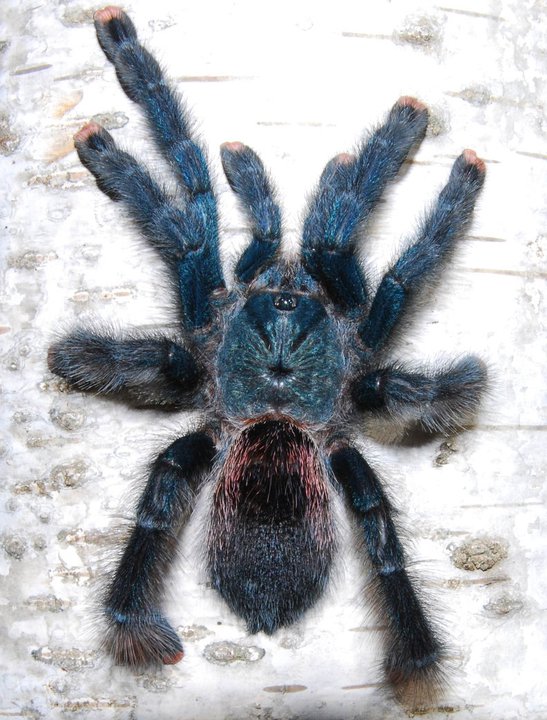
Photo Credit: Exotics Unlimited
- Temperature76–84°F (24–29°C) — warm, with the top of the enclosure warmest so it can thermoregulate up. Steady rainforest warmth; a normal warm room suits it. No hot basking lamps.
- HumidityHigh but ventilated — 70–80%. This is the whole game with Avics: they want moisture AND strong cross-ventilation. Keep the lower substrate lightly damp and the top dry, mist lightly or overflow the dish every few days, and above all keep the air moving. Wet, stagnant, unventilated air is what kills pinktoes; humid, airy conditions keep them thriving.
- Adult sizeA medium-sized tarantula: adults reach 4.5–6 inches across the legs (diagonal leg span). A steady grower at a moderate pace.
- LifespanFemales roughly 10–12 years; mature males 4–5 years.
Enclosure
Tall arboreal — a 12×12×18" with strong cross-ventilation (holes/mesh on opposite sides), height over floor. Give a vertical cork slab, branches and plants for climbing and web anchoring; it builds silk tube retreats up high. Front-opening arboreal enclosures are ideal. Slings in tall, well-ventilated deli cups.
Substrate & water
1–2 inches of coco/topsoil at the base to hold light humidity, kept lightly damp below and dry on top, with a water dish. The action is vertical — the substrate is just for moisture and the occasional ground trip.
Feeding
A willing feeder that snatches prey from its web. Prey to abdomen size — flightless fruit flies/pinheads for slings, crickets and small roaches for adults; slings every 3–4 days, adults weekly. Remove uneaten prey promptly.
Temperament & defenses
Beginner-friendly and docile — calm but skittish and jumpy when startled (it may leap rather than bite), so work calmly. It can flick urticating hairs but rarely does, and its unusual defence is firing a jet of faeces at threats. Handling risks a startled leap-and-fall; a display-and-observe species.
Keeper’s notes
Our recommended first arboreal — gentle, gorgeous with those pink toes and colour-shifting bodies, and endlessly watchable as it builds silk homes up in the branches. The one rule we drum into every buyer: ventilation, ventilation, ventilation. Give it a tall, airy enclosure with a damp base and a vertical retreat, and it's one of the easiest, prettiest tree spiders in the hobby.
Browse available specimens → None of this species in stock right now — browse the full shop or check back soon.
We raise and document every animal before it ships, so stock moves slowly and quietly. Leave your email and we'll tell you the moment one is ready — no other mail, and you can leave the list any time.