
Antilles Pinktoe
Caribena versicolor
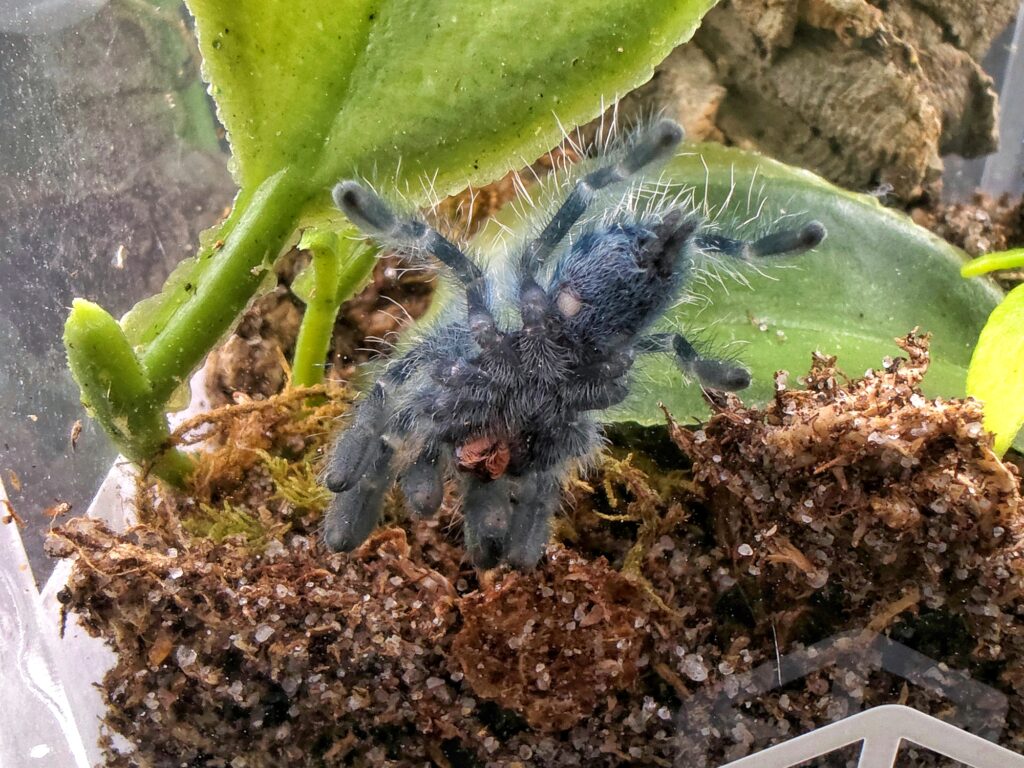
The Antilles Pinktoe (Caribena versicolor) is the crown jewel of beginner arboreals — electric-metallic-blue as a spiderling, transforming through greens and reds to a shimmering adult dusted in purple, with pink toes throughout. Endemic to Martinique in the Lesser Antilles, it's docile, active, and a gorgeous web-builder. Long dismissed as 'delicate' due to Sudden Avic Death Syndrome, we now know the real culprit was stagnant air, not low humidity — get ventilation right and this is a rewarding, forgiving showpiece.
- Temperature72–82°F (22–28°C) — warm, with a gradient (top warmest) so it can thermoregulate up the enclosure. Martinique runs a near-constant 80–82°F; a warm room suits it. No hot basking lamps.
- Humidity70–80% with HIGH ventilation — this is the key lesson. Keep the lower substrate lightly damp and the top layer dry, overflow the dish or mist lightly, and pair it with strong cross-ventilation. 'Sudden Avic Death' was really wet, stagnant, unventilated air — humid-but-airy is the target, never soggy-and-still. Slings especially must not be kept overly wet.
- Adult sizeA medium-sized tarantula: adults reach 5–6 inches across the legs (diagonal leg span). A steady grower at a moderate pace.
- LifespanFemales roughly 10–12 years; mature males 2–3 years.
Enclosure
Tall arboreal with excellent cross-ventilation — a 12×12×18" (Mini Tall style) with holes/mesh on opposite sides, height over floor. Vertical cork, branches and plants for climbing and web anchoring; it builds silk retreats up high. Front-opening ideal; secure it well (it's fast and jumpy). Slings in airy tall vials.
Substrate & water
1–2 inches of coco/topsoil at the base, lower layer a bit damp and top dry, with a water dish. Vertical structure matters far more than substrate depth. Ventilate the base to prevent mold.
Feeding
A keen feeder that ambushes from its web. Prey to abdomen size — fruit flies/pinheads for slings, crickets/small roaches for adults; slings every few days, adults weekly. Remove uneaten prey promptly. Wait until fangs blacken post-molt before feeding.
Temperament & defenses
Beginner-friendly and docile, but fast, skittish and jumpy — it leaps when startled rather than biting, and may fire faeces at a threat. Rarely flicks hairs. Venom mild. A display-and-observe species; handling risks a startled leap-and-fall.
Keeper’s notes
If you want the single most beautiful beginner arboreal, this is it — that blue-sling-to-jewelled-adult transformation is one of the great sights in the hobby. It earned an undeserved 'difficult' reputation; the truth is simpler than it sounds: warm, humid, and above all VENTILATED, with a dry-topped damp base. Give it that and a vertical retreat and it thrives. A genuine showpiece.